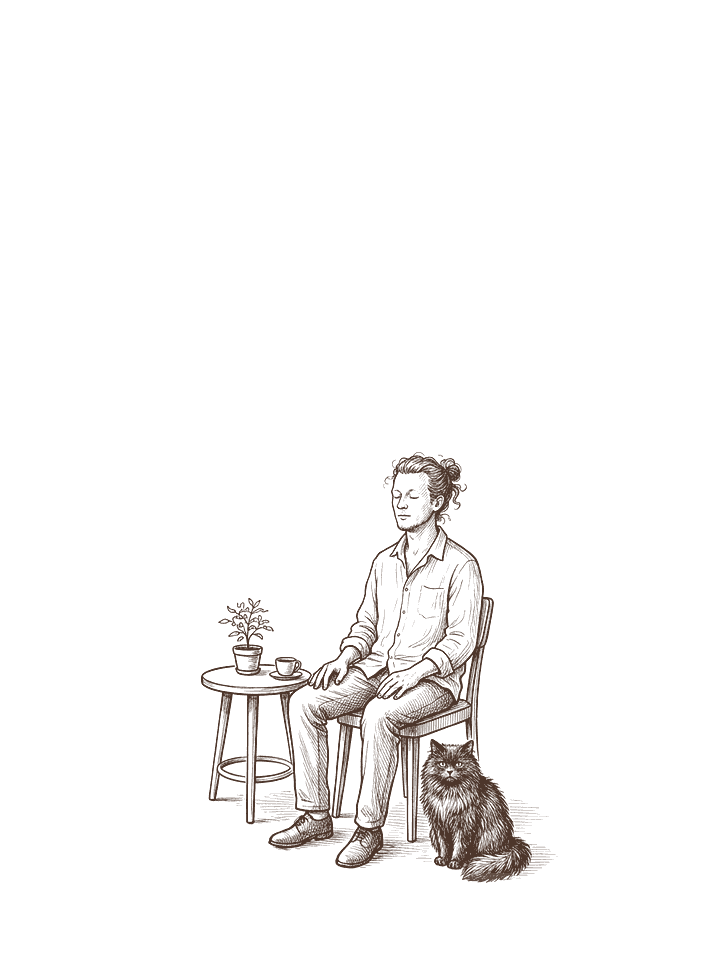
To start meditating as a beginner, choose one ordinary thing to attend to, a sound already in the room or an object in front of you, and notice what is there. When you realize your attention has moved to a thought or another task, return to the chosen sound or object if you want to continue. About two minutes, including getting ready and finishing, is offered as a convenient window, with no special equipment, clothing or prescribed sitting pose. You can use less time or stop whenever you choose.
Choose a simple starting point
Choose one ordinary thing to attend to: a sound already in the room or an object in front of you. Notice what is there. When you realize your attention has moved to a thought or another task, return to the chosen sound or object if you want to continue. Finishing is always an option.
Below are three ways to explore attention without special equipment, clothing or a prescribed sitting pose. Choose the one that is accessible and comfortable today. About two minutes, including getting ready and finishing, is offered as a convenient window; you can use less time or stop whenever you choose.
What meditation means here
NCCIH describes meditation as a range of practices, some organized around a sound, image, word or other focus. Mindfulness is often described as noticing what is happening now without judging the experience. That wording describes an approach; it does not ask you to eliminate every judging thought.
In this guide, I use that background to explain three short, secular attention exercises. Each explores one aspect of practice. Together they are still an introduction, not a complete course or an account of every meditation tradition.
Choose a format
- Listening follows sounds as they appear and fade. It is an option when you would like to notice what is already audible, without putting on music or searching for a particular sound.
- Looking follows the visible details of an everyday object: its shape, color and surface. Choose it if a nearby object is a comfortable, accessible place to begin.
- Returning stays with one sound or visual detail where possible. Its subject is the moment you notice that your attention has moved elsewhere, and the choice to come back or finish.
Choose one format rather than making a sequence out of all three. Skip listening if sound is unavailable or unpleasant, and skip looking if visual attention is unavailable or uncomfortable. An ordinary break remains a complete choice.
Set up an ordinary pause
Pause where you can safely leave your current task. Use a comfortable position and any support you normally need. Looking means keeping your eyes open; for listening, you may keep them open or choose what is comfortable. Let breathing continue in its usual way.
Keep the alerts and responsibilities you need available. These exercises belong in a pause, never while driving, operating equipment or attending to something that needs an immediate response. If a timer is useful, choose an ending sound you are comfortable hearing; otherwise leave the timing open.
When thoughts interrupt
An errand may come to mind, or you may start evaluating how the exercise is going. Notice that shift, then decide whether to return or finish. The NHS introduction describes returning attention as part of mindfulness practice; there is no need to remove the thought or count the interruptions.
Finish without a score
To finish, notice your surroundings in a way that works for you and return to the day. An optional note can record the format and whether you would choose it again. Feeling calmer is not a condition of completing the exercise.
If the exercise is uncomfortable or distressing, stop and take an ordinary break. There is nothing to gain by treating that discomfort as a test to pass. If distress persists or affects daily life, seek support from a qualified health professional. Mind discusses personal fit and getting support.
These are educational attention activities. They do not promise a change in health, sleep or performance.
Choose a practice
- Listen to the sounds around you
- Look closely at an everyday object
- Return to your chosen focus
- Prefer to put a task aside and decide what comes next? Use A quiet pause and a smaller next step.
Listen to the sounds around you
This card uses the sounds already around you. You can leave music and headphones aside; a silent room is not needed. The task is to notice a sound, rather than arrange a particular listening experience.
Optional time: about two minutes, including setup and finishing. You can stop sooner.
Before you begin
Choose a place where a pause is safe and you can still respond to what needs your attention. Settle in a comfortable position with your usual support. Your eyes may stay open, or you can choose what is comfortable; breathing continues as usual.
Try the practice
- Set the current task aside for the pause. Leave the player off for this exercise; there is nothing you need to switch on.
- Let an audible sound become the starting point: perhaps a fan, a vehicle passing or movement in the room. You can notice it without identifying where it comes from.
- Stay with one quality you can hear—steady or changing, close or farther away. When another sound arrives, notice it without searching for something more interesting.
- When a thought takes your attention, come back to a sound that is present now if you want to continue. You can also finish. There is no missed sound to recover.
- At the end, notice the surroundings in a way available to you and resume your day. The pause does not need a final discovery.
Make it fit
If listening is unavailable, irritating or uncomfortable, leave this card aside. Try looking at an object only if that works for you, or take an ordinary break. Stop if distress develops. Do not strain for faint sounds or ignore an alert, conversation or responsibility to continue.
One optional note
Which sound did I notice? A word or two is enough. Leave this blank if you prefer.
Here the sound can change from moment to moment. If you want to focus instead on returning after distraction, the Return to your chosen focus card explains that particular step.
Source context
The NHS introduction includes attending to sounds and returning after distraction. UCLA’s longer Breath, Sound, Body practice also includes changing sounds. Those common elements inform this short card; neither source tested this exact version.
Look closely at an everyday object
Choose something ordinary that is already available: a closed notebook, an empty cup or a smooth stone. This card explores its visible details, so there is no need to buy or prepare a special object.
Optional time: about two minutes, including setup and finishing. You can stop sooner.
Before you begin
Use an object that can safely stay where it is, or place it within comfortable view if that is easy to do. Settle with your usual support and glasses or other visual aids. Candles, bright lights and screens are not objects for this exercise.
Try the practice
- Begin with the overall shape. Let your gaze move and blink normally as you look; holding a stare is not part of the exercise.
- Follow an edge or outline briefly. You are looking at what is there, not trying to memorize it.
- Then notice a color difference, a shadow or one visible detail of the surface.
- If the object brings up a story or you begin thinking about another task, notice the shift. Return to a visible detail if you want to continue, or finish. The thought can remain without needing to be pushed away.
- Finish by looking elsewhere in the room and returning to your day.
Make it fit
Leave the object where it is unless moving it is easy and safe. If looking is tiring or unavailable, you can stop, try the listening practice or take an ordinary break. There is no need to touch, taste or smell it. Stop if the activity becomes distressing; continuing through discomfort is not the task.
One optional note
A detail I had not noticed: ______________________________
This card lets the details you notice change. The returning card below uses a single chosen detail where possible, so you can explore what happens when attention moves away and comes back.
Source context
The NHS introduction and Mind’s exercises describe noticing everyday sensations. The objects and order of steps here are editorial choices for this guide, rather than a sequence validated by those sources.
Return to your chosen focus
When you realize you have become distracted, you have a choice about what to do next. This card explains returning to one focus without restarting a timer or treating the distraction as an error.
Optional time: about two minutes, including setup and finishing. You can stop sooner.
Before you begin
Find a safe pause with no task requiring immediate attention, and use your normal support in a comfortable position. Choose one accessible focus: an edge of a notebook, a detail on a cup or an ordinary sound such as a fan. Let breathing remain ordinary.
Try the practice
- Begin with the chosen focus. For a visible detail, keep your eyes open and blink normally. Eyes can stay open for a sound focus as well.
- Stay with what you notice. There is no requirement to hold attention perfectly still.
- When you realize you are thinking about something else, acknowledge the shift. The quiet word “thinking” is an option if it helps you recognize it; you do not need a label or an explanation of the thought.
- Decide whether to return or finish. If you continue, use the same focus where possible; if the sound has ended, choose another ordinary sound. Continue from this point rather than starting the exercise over.
- An interruption that needs a response comes first. Attend to it, and let the exercise end there if needed. You can also finish without waiting for an interruption.
Make it fit
There is no need to manufacture a distraction, count your returns or make a thought disappear. If neither sound nor a visible detail works for you, choose an ordinary break. End the exercise if it becomes uncomfortable or distressing; pushing through is not part of it.
One optional note
The focus I chose: _____________________________________
The earlier cards explore changing sounds or details. Here, one focus remains the reference where possible, and the action you are exploring is returning to it.
Source context
The NHS introduction and Mind’s exercises describe returning attention without removing thoughts. UCLA’s Breath, Sound, Body script also offers optional thought-labeling. These common instructions inform this short exercise; the sources are not its reviewers or endorsers.
Keep a paper reminder
Use the worksheet below if a paper reminder would help. You can print it or keep notes in your own local document; the exercise does not depend on filling it in.
Frequently asked questions
Why is meditation not working for me?
These exercises do not promise a change in health, sleep or performance, and feeling calmer is not a condition of completing one. Thoughts that interrupt are part of the practice: notice the shift, then return or finish, without removing the thought or counting interruptions. If a format does not suit you, choose another or take an ordinary break. If an exercise is uncomfortable or distressing, stop; if distress persists or affects daily life, seek support from a qualified health professional.
How long should a beginner meditate?
The page offers about two minutes, including getting ready and finishing, as a convenient window. You can use less time or stop whenever you choose.
Is it OK to meditate lying down?
Yes. Mayo Clinic says you can practice meditation whether you’re sitting, lying down, walking, or in other positions, and suggests choosing a comfortable position while keeping good posture. If an exercise is uncomfortable or distressing, stop.
Do you have to clear your mind to meditate?
This guide does not ask you to. It describes mindfulness as noticing what is happening now without judging the experience, and says that wording does not ask you to eliminate every judging thought. When your attention moves, you can return to the chosen sound or object, or finish.
What is the difference between meditation and mindfulness?
NCCIH describes meditation as a range of practices, some organized around a sound, image, word or other focus. Mindfulness is often described as noticing what is happening now without judging the experience.
Sources and what they support
Primary sources were compared with AI assistance on 16 October 2026. Good & Steady prepared these educational exercises using common mindfulness instructions; no independent human fact-checking or medical review is claimed. The source check considered 12 main sources and an additional Mind page; these are not 12 independent trials of this guide. The sources do not test these exact sequences, the worksheet or the suggested two-minute window. No source organisation is presented as an author, reviewer or endorser.
- NCCIH / NIH — Meditation and Mindfulness: Effectiveness and Safety. Definitions and the scope of meditation and mindfulness; no guarantee of benefit or universal safety.
- NHS — Mindfulness. Everyday sensory awareness, returning after distraction and personal choice.
- Mind — Mindfulness exercises and tips; About mindfulness. Practical attention exercises and accessible alternatives; the object choices here are editorial examples.
- UCLA Mindful Awareness Research Center — Breath, Sound, Body Meditation. A published longer practice including changing sounds and optional thought-labeling; not a trial of these exercises.
- U.S. Department of Veterans Affairs — Mindful Awareness Practice in Daily Living. An educational handout about ordinary awareness; its short intervals do not establish a tested dose.
- U.S. Department of Veterans Affairs — Precautions with Using Mindful Awareness Practices. Precautions, personal choice and seeking support; not a suitability checklist for every reader.
- Hasenkamp et al., 2012 — Mind wandering and attention during focused meditation. Research on phases of attention in experienced meditators; not evidence that two minutes improves attention.
- Britton et al., 2021 — Defining and Measuring Meditation-Related Adverse Effects in Mindfulness-Based Programs. Research on adverse experiences during longer mindfulness programs; its rates cannot be applied to these exercises. Only the accessible abstract and open-practices material were reviewed.
- Lindahl et al., 2017 — The varieties of contemplative experience. Selected accounts of difficult experiences and support; not a prevalence estimate for all meditators.
- Schlosser et al., 2019 — Unpleasant meditation-related experiences in regular meditators. A retrospective survey of regular meditators; it cannot establish causation or individual suitability.
- Farias et al., 2020 — Adverse events in meditation practices and meditation-based therapies: a systematic review. A systematic review of earlier research; not another independent trial or a risk estimate for these exercises.
- Beloborodova et al., 2026 — Prevalence and Predictors of Self-Reported Adverse Experiences in Digital Meditation Training: 2 Randomized Controlled Trials. An analysis of self-reported experiences during digital training; it does not establish harm caused by these exercises or prove universal safety.