Choose a fit, not a detox rule
Begin with what is already within reach. A book or familiar game may fit the time you have more readily than a new hobby. Choosing it does not commit you to buying supplies or avoiding your phone for the rest of the evening.
This is a leisure chooser, not therapy or a screen-time limit. Screens may provide access, companionship, instructions or essential communication. Keep the technology that has a useful job to do.
Compare a few ordinary options
Something to read or make alone
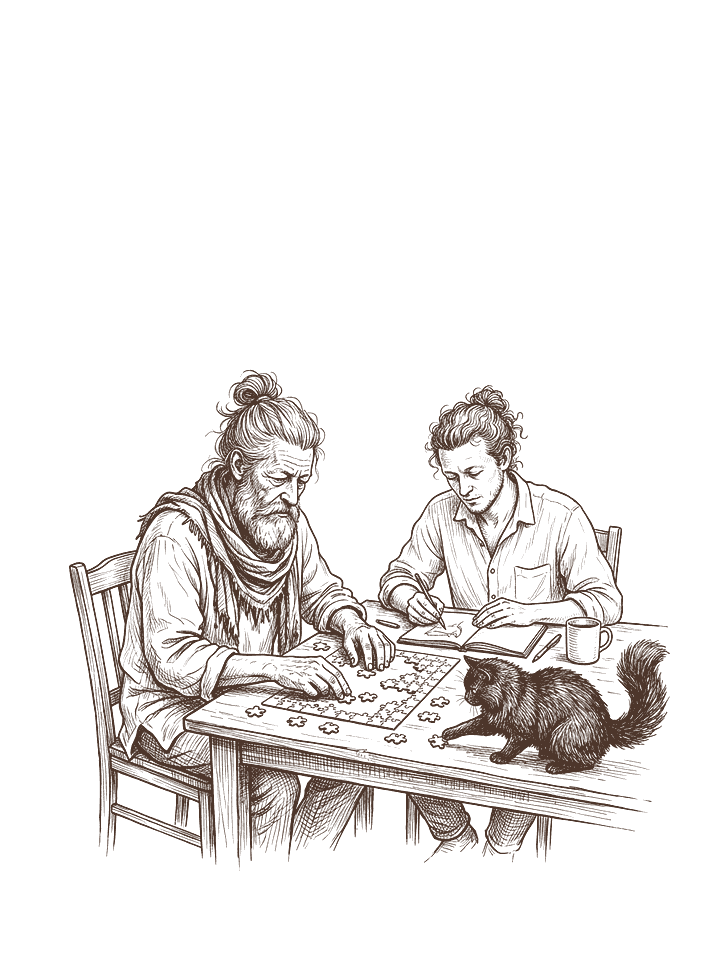
Read a paper book, write a note, do a puzzle you already own or sketch an object nearby. There is no requirement to complete a chapter or produce something worth displaying. Choose the version you would actually start.
For an optional resource, the University of Michigan Clements Library provides downloadable coloring PDFs, including a collection section for all ages. A brief online preparation step can supply an offline activity. Check its usage directions before reproducing material for something beyond your own activity.
Something to share
Use a familiar board or card game, look through a paper photo collection together, or agree on a simple shared activity. Ask whether the other person wants to join; a screen-free preference does not create a rule for the whole household.
Check the setup before giving the activity a place in your evening. Missing pieces, unfamiliar rules or a reservation may make it a plan for another day. In that case, write down the preparation still needed.
Something outside your usual room
Check a local library, museum or community venue for an activity you want to attend. Verify whether it is in person, its current date, cost, registration and access information. Not every event listed by a cultural institution is offline or free.
For example, the Smithsonian National Portrait Gallery’s museum page lists upcoming events. Check each listing’s date, format, cost, registration and access details before planning a visit. Treat it as an example of the kind of official listing to inspect, not a promise that a seat or equivalent local event is available when you read this guide.
Make the starting point visible
Make the first action easy to recognise: borrow the book, print the page or ask someone to join. If your space allows it, leave the materials where you intend to use them. These are ways to organise an activity, not claims about changing mental health.
The National Gallery of Art’s drawing resource shows basic drawing techniques. It is labeled as a classroom resource for grades 6–12; adults can inspect it as an optional introductory resource, but it is not an adult therapeutic program or proof of a wellbeing effect.
Leave an easier alternative
Reduce the preparation if that is what stands in the way. Looking through a book can replace starting a craft project; a familiar game can replace learning new rules. Choosing another activity, including one with a screen, remains an option.
Copy the activity chooser
| Question | Your note |
|---|---|
| What I feel like doing: reading, making, sharing or going out | Paper note: __________________ |
| Materials or space already available | Paper note: __________________ |
| Solo or shared, and whether someone wants to join | Paper note: __________________ |
| Preparation, booking or access details to check | Paper note: __________________ |
| Where this activity could fit today | Paper note: __________________ |
| Version with less setup | Paper note: __________________ |
| Essential device use I want to keep | Paper note: __________________ |
| What I would change next time | Paper note: __________________ |
Give one optional activity a place in My Week
Add a preparation action to My Week only if it belongs in your plan. Keep the activity details yourself: the tool cannot import this worksheet or reserve a place. An unused leisure idea does not need to become a task you owe.
For a workday context, see phone-free work breaks. For a recurring learning option, adult classes covers questions to ask before joining. If the issue is where to keep a phone at night, use the practical phone-out-of-bed guide without treating it as an insomnia treatment.
Frequently asked questions
What can adults do instead of being on their phone?
Start with what is within reach: a book, a pen and paper, a puzzle or a familiar game. Our activity chooser helps you pick one by the time and setting you have.
Do I need to buy supplies for a screen-free hobby?
No. Most ideas here use things you already have. Buy something only after you know you want to keep doing it.
Is a screen-free evening better for my health?
This page is about choosing leisure, not a health rule. Keep the devices you need for access, instructions or staying in touch.
What screen-free activities can I do with friends?
A familiar board or card game, a paper photo collection to look through together, or a simple shared activity you agree on. Ask first whether the other person wants to join.