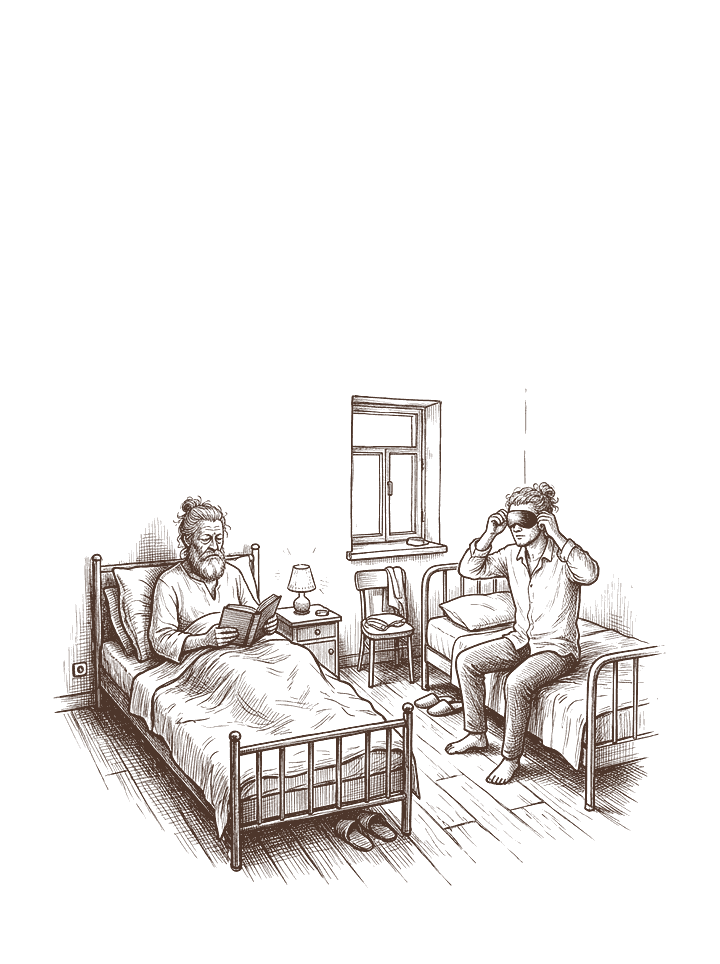
Begin with a particular evening moment
Give the conversation something both people can recognize. “The overhead light comes on when you arrive” identifies an event you can discuss. A shared-bedroom checklist works from those details and preferences, not from a judgement about whose routine is correct.
Avoid turning the observation into a judgement about the other person. “You always ruin the evening” leaves no clear room arrangement to discuss. Keep the worksheet focused on the practical detail you want to resolve.
Separate a preference from a requirement
Someone may prefer complete darkness while another person needs light to move around. An alarm, accessibility device or other essential equipment may have a job that cannot simply be switched off.
Put both needs on the page before looking for a change. A preference for darkness and a need for light to move around may require different arrangements. You can keep one item unchanged and work on another.
List light, sound and timing separately
NHLBI’s general sleep guidance describes a quiet, cool, dark bedroom and allows a dim night-light if needed. This gives context for discussing the room. It does not establish that your agreement will improve either person’s sleep.
Light
Note which light is involved, when it is used and what it is needed for. A possible conversation might concern using an existing lamp instead of the overhead light when that works for both people. You do not need to buy a product or improvise electrical changes.
Keep the lighting needed to use the space. Do not cover equipment, block access or turn off essential devices to make a checklist look complete.
Sound
Describe the particular sound: a call, a television, an alarm or an activity elsewhere in the household. Then distinguish what you can agree on from something neither person controls.
“Could that call take place in the other room when it is available?” is a question. It becomes an arrangement only if the people involved agree. A private note is not consent from someone else.
Different arrival or waking times
Write what needs to happen when someone enters or leaves the room. Perhaps belongings can be gathered earlier, or an item can stay somewhere easier to reach. These are optional preparation ideas, not a required bedtime routine.
Do not promise that a different arrival arrangement will prevent waking. Record what you intend to do and leave the outcome open.
Agree on an option and a fallback
Once you agree on a change, add what happens on an unusual day. “Ask before taking the call here if the other room is occupied” is a workable fallback only when you both accept it. A written plan should reflect that agreement rather than assume every evening will match.
CDC’s habit-planning guidance supports having a backup and adapting a plan when circumstances change. We use that planning idea here; the source does not test shared-bedroom agreements or establish effects on sleep or relationships.
Return to the conversation when the arrangement stops fitting. Either person can ask to change it, and restoring the earlier setup remains an option. There is no need to preserve a rule simply because it was once written down.
Copy the shared-room agreement sheet
This original worksheet records an agreement, not medical information. You can use one row at a time rather than reviewing every part of the room.
| Question | Agreed note |
|---|---|
| Specific light, sound or timing moment | Paper note: __________________ |
| What each person needs | Paper note: __________________ |
| What must stay available or unchanged | Paper note: __________________ |
| One arrangement we both accept | Paper note: __________________ |
| Who prepares what, if relevant | Paper note: __________________ |
| What to do when the usual arrangement does not fit | Paper note: __________________ |
| When we will discuss whether to keep or revise it | Paper note: __________________ |
Keep room preparation separate from sleep care
The sheet cannot explain persistent sleep difficulties. CDC advises discussing regular sleep problems with a healthcare provider. A room agreement does not replace that conversation or make another person responsible for resolving a health concern.
For a separate room observation sheet, see the bedroom light and noise check. For personal preparation, see Build Your Own Bedtime Checklist.
Give your own preparation a place in My Week
Take only the part you personally control to My Week, if a reminder would help. Keep the shared agreement on paper or in your own notes. The planner does not import the worksheet or manage another person’s schedule.
An arrangement that is no longer useful can change. It does not become a debt to complete later.
From Pavel’s experience
Personal experience — Pavel Rachkouski, founder. One person’s notes, not advice.
My partner works an ordinary job with a changing schedule. I’m always up first; she gets up at 9, 10 or 11, depending on when she has to be at work.
Frequently asked questions
What can we do when one partner goes to bed later?
Start with the moment that needs an arrangement, such as a lamp switched on when the other person arrives. Write what needs to happen when someone enters or leaves the room: perhaps belongings can be gathered earlier, or an existing lamp can be used instead of the overhead light when that works for both people. Keep essential light, alarms and equipment available, and agree on an option and a fallback. This checklist does not promise that a different arrival arrangement will prevent waking.